
01
Ceiling height is under 10 feet
Basement builds often need overhead monitors, shallow enclosures, or careful mat and tee placement, planned in CAD before ordering gear.
Basement Build
Purpose built basement golf rooms with moisture aware subfloors, acoustic treatment, ceiling mounted tracking, and finish carpentry matched to Toronto homes.
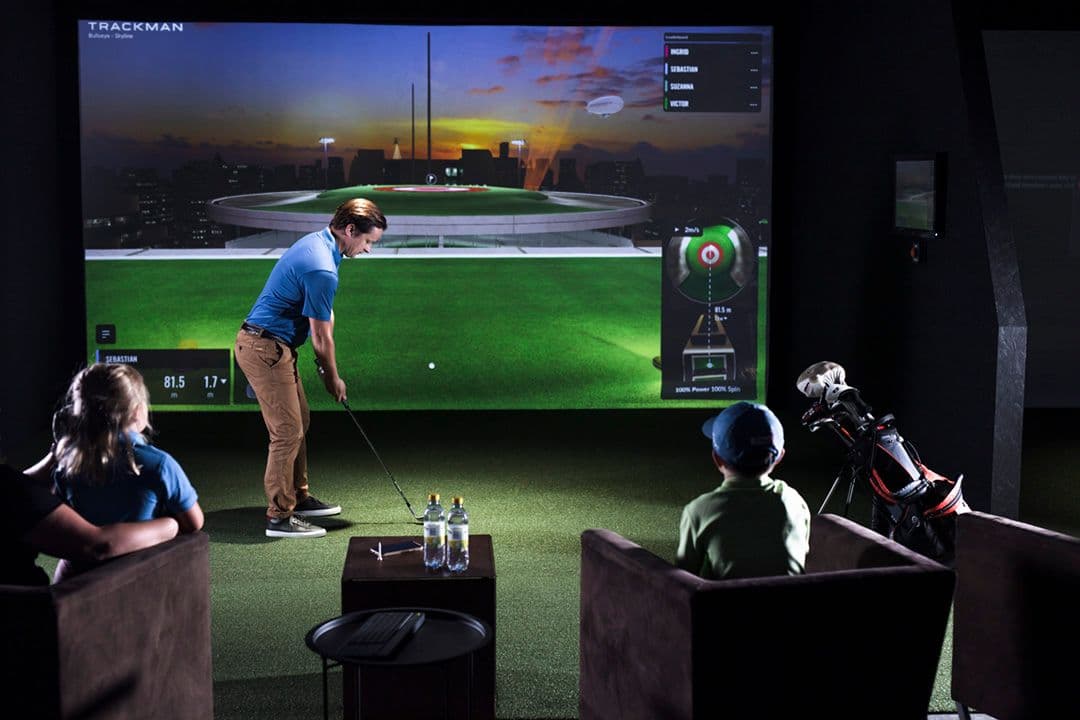
“They designed and installed our basement sim from scratch: clean finish, accurate launch monitor setup, and it plays exactly like we hoped.”
Sarah L. · Oakville
Need a design consult?
Contact us online
Basement Build
Basements are the most popular simulator location in Toronto, and the most unforgiving when build details are wrong. If you are planning a basement golf simulator build, low ceilings, columns, bulkheads, humidity, and sound transmission to the floor above must be solved in design, not discovered mid build.
We specialize in basement rooms that respect the house: moisture managed subfloors, acoustic packages that keep driver noise out of the kitchen above, and enclosures that work around structural posts without shrinking the hitting zone awkwardly.
Across Toronto and the GTA, our basement projects prioritize clearance verification, clean finishes, and tracking accuracy in the tighter volumes basements often provide.
Best Fit
The right scope depends on the room, the stage of your project, and how finished the space needs to feel.
Basement builds often need overhead monitors, shallow enclosures, or careful mat and tee placement, planned in CAD before ordering gear.
Acoustic design is not optional in attached homes; we spec insulation, decoupling, and panel systems for real noise reduction.
Turf, electronics, and drywall all fail faster on damp slabs. We address subfloor and ventilation in the plan.
We design enclosures that integrate posts into the architecture instead of shrinking the hitting bay off centre.
Process
Measure clearance, columns, soffits, stair access, and moisture indicators.
CAD layout optimizing hitting zone around obstructions and ceiling sensors.
Subfloor, framing, acoustic insulation, and electrical/data rough in.
Basement Build
Share the room, project stage, plans or photos, and intended use. We will follow up to discuss feasibility, scope, and practical next steps.
Basement Build FAQ
Practical questions clients ask about basement simulator room build.
Many Toronto basements work at 9.5 to 10 feet with the right monitor and swing verification. We confirm in the feasibility visit with no guesswork.
We use engineered subfloors and premium turf systems to protect concrete and reduce vibration transfer.
Yes. Many basement projects use custom panelling, lighting, and media integration so the room reads as a lounge when not in use.
Yes. We model those obstructions directly in the layout and position the hitting zone, screen, and monitor so playability is preserved without awkward off centre setups.
In many Toronto basements, yes. Stable humidity helps protect turf, electronics, and finishes while improving long term consistency of the hitting surface.
Where we install
Custom basement build for high-end homes across Toronto, the GTA, and select Canadian markets.
Related planning: Room size guide · All resources
Related Services
Most projects combine room planning, buildout, equipment integration, and calibration.
Custom Design-Build
Custom design-build for finished golf simulator rooms and private golf lounges, with premium finishes, acoustic planning, concealed technology, and one accountable team.
View serviceDesign Consultation
Laser measured feasibility study, swing path verification, and CAD layout for your home golf simulator, before you commit to hardware or construction.
View serviceGarage Conversion
Climate controlled garage and outbuilding simulator conversions with insulated enclosures, durable turf, and hardware suited to temperature swings.
View service