
01
You are comparing basement vs garage vs dedicated room
Different spaces demand different enclosure sizes, subfloor strategies, and launch monitor types. Feasibility work answers which option actually fits before you spend on the wrong platform.
Design Consultation
Laser measured feasibility study, swing path verification, and CAD layout for your home golf simulator, before you commit to hardware or construction.
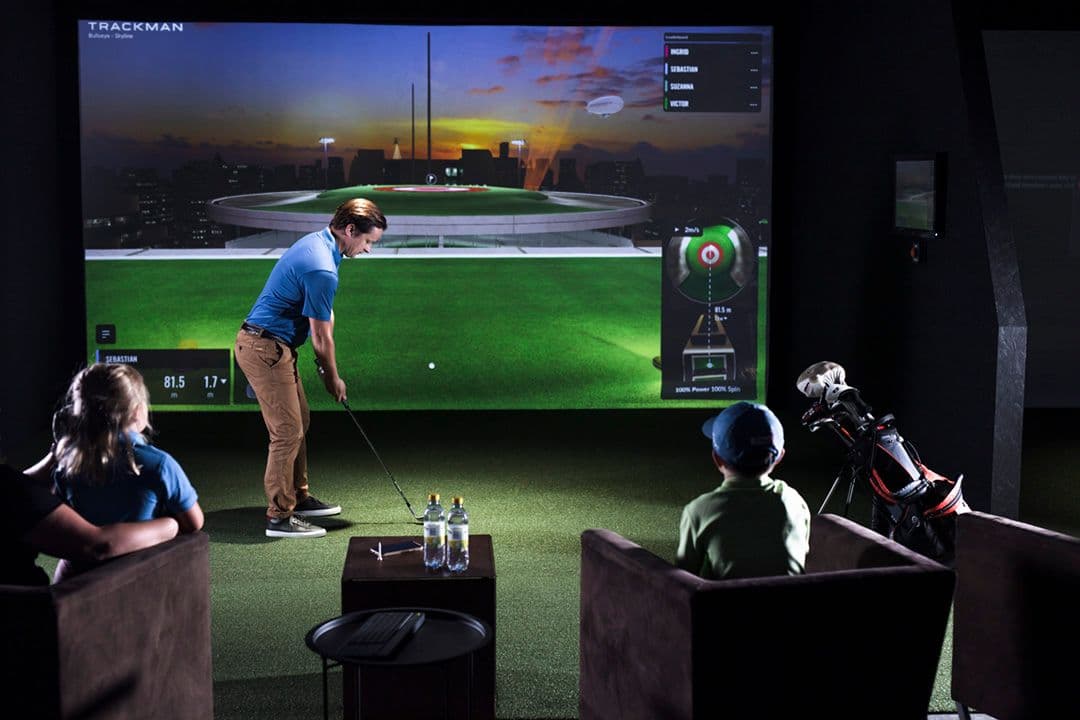
“They designed and installed our basement sim from scratch: clean finish, accurate launch monitor setup, and it plays exactly like we hoped.”
Sarah L. · Oakville
Need a design consult?
Contact us online
Design Consultation
A home golf simulator is a construction project disguised as a product purchase. If you are searching for golf simulator room design in Toronto, the highest risk mistakes almost always happen before construction starts: wrong ceiling assumptions, poor swing clearance, bad sensor sightlines, and projector throw choices that force expensive rework.
Our design consultation is a structured spatial study, not a sales pitch. We measure your room, verify clearance for every club in the bag, review structural and access constraints, and produce a CAD layout that shows where the screen, sensors, hitting zone, and seating actually fit.
You leave with a clear picture of what is possible in your Toronto home, and an itemized scope for the build path that makes sense for your property, whether that is a basement room, garage conversion, or estate scale dedicated studio.
Best Fit
The right scope depends on the room, the stage of your project, and how finished the space needs to feel.
Different spaces demand different enclosure sizes, subfloor strategies, and launch monitor types. Feasibility work answers which option actually fits before you spend on the wrong platform.
Driver clearance depends on swing plane and sensor mounting, not a single tape measure at centre room. We verify safe margins for your height and swing.
Dual use rooms need early planning for projector placement, acoustically transparent screens, and recessed sensors that do not fight the cinema layout.
The best results come when finish work, electrical, HVAC, and framing are coordinated in the renovation plan, not added after drywall is up.
Process
We review your goals, space candidates, budget range, and preferred launch monitor brands before scheduling the site visit.
Precision measurements of length, width, ceiling height, obstructions, joists, and access paths for materials and equipment.
We map swing arcs, safe standoff from screen, and overhead or side mounted sensor sightlines for your players.
Design Consultation
Share the room, project stage, plans or photos, and intended use. We will follow up to discuss feasibility, scope, and practical next steps.
Design Consultation FAQ
Practical questions clients ask about design consultation & spatial feasibility.
We provide a clear quote for the feasibility study after a brief project review. Complex multi space or dual purpose projects may require a paid CAD phase, always scoped upfront with no surprise fees.
Most residential feasibility visits run 90 to 120 minutes, including laser measurement, swing checks, and a walkthrough of construction and finish options.
No. We recommend monitor category and mounting approach based on your room, not vendor rebates. You can purchase hardware after the layout is confirmed.
Yes. We share CAD layouts and ceiling/sensor requirements with renovation teams regularly on Toronto custom home projects.
Yes. We verify usable swing clearance for your body height and club length, not just raw room dimensions, and we flag any compromises before build decisions are made.
Absolutely. The CAD backed scope and technical notes give you a clean baseline so you can compare proposals on real deliverables rather than vague package language.
Where we install
Custom design consultation for high-end homes across Toronto, the GTA, and select Canadian markets.
Related planning: 3D room planner · All resources
Related Services
Most projects combine room planning, buildout, equipment integration, and calibration.
Custom Design-Build
Custom design-build for finished golf simulator rooms and private golf lounges, with premium finishes, acoustic planning, concealed technology, and one accountable team.
View serviceBasement Build
Purpose built basement golf rooms with moisture aware subfloors, acoustic treatment, ceiling mounted tracking, and finish carpentry matched to Toronto homes.
View serviceGarage Conversion
Climate controlled garage and outbuilding simulator conversions with insulated enclosures, durable turf, and hardware suited to temperature swings.
View service